
75 lines
4.0 KiB
Markdown
75 lines
4.0 KiB
Markdown
# Configure credentials for Valet
|
|
|
|
In this lab, you will use the `configure` CLI command to set the required credentials and information for Valet to use when working with Azure DevOps and GitHub.
|
|
|
|
You will need to complete all of the setup instructions [here](./readme.md#configure-your-codespace) prior to performing this lab.
|
|
|
|
## Configuring credentials
|
|
|
|
1. Create an Azure DevOps Personal Access Token (PAT).
|
|
1. __Note__: you may skip this step if you still have the PAT created during the setup steps [here](./readme.md#bootstrap-your-azure-devops-organization).
|
|
2. Navigate to your existing organization (<https://dev.azure.com/:organization>) in your browser.
|
|
3. Click `User settings` in the top right corner of the screen.
|
|
4. Click `Personal access tokens`.
|
|
5. Select `+ New Token`
|
|
6. Name your token, select the organization where you want to use the token, and set your token to automatically expire after a set number of days.
|
|
7. Select the following scopes (you may need to `Show more scopes` to reveal all scopes):
|
|
- Agents Pool: `Read`
|
|
- Build: `Read & Execute`
|
|
- Code: `Read & Write`
|
|
- Project and Team: `Read, Write, & Manage`
|
|
- Release: `Read`
|
|
- Service Connections: `Read`
|
|
- Task Groups: `Read`
|
|
- Variable Groups: `Read`
|
|
8. Click `Create`.
|
|
9. Copy the generated API token and save in a safe location.
|
|
|
|
2. Create a GitHub Personal Access Token (PAT):
|
|
1. Open github.com in a new browser tab.
|
|
2. Click your profile photo in the top right of the UI and click `Settings`.
|
|
3. Click on `Developer Settings` in the left hand panel.
|
|
4. Click `Personal Access Tokens` and then `Legacy tokens` (if present).
|
|
5. Click `Generate new token` and then `Legacy tokens`. You may be required to authenticate with GitHub during this step.
|
|
6. Select the following scopes: `read:packages` and `workflow`.
|
|
7. Click `Generate token`.
|
|
8. Copy the generated PAT and save in a safe location.
|
|
|
|
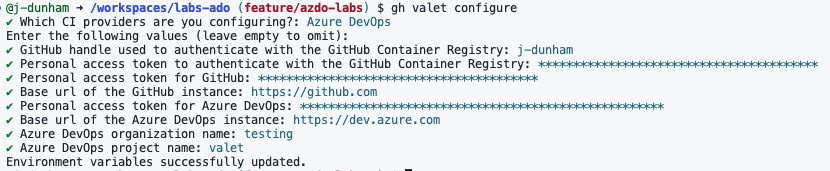
3. Run the `configure` CLI command:
|
|
- Select the `TERMINAL` tab from within the codespace terminal window.
|
|
- Run the following command: `gh valet configure`.
|
|
- Using the down arrow key to highlight `Azure DevOps`, press the spacebar to select, and then hit enter to continue.
|
|
- At the GitHub Container Registry prompt enter the GitHub PAT generated in step 2 and press enter.
|
|
- At the GitHub PAT prompt enter the GitHub PAT generated in step 2 and press enter.
|
|
- At the GitHub url prompt enter the GitHub instance url or hit enter to accept the default value (`https://github.com`).
|
|
- At the Azure DevOps token prompt enter the access token from step 1 and press enter.
|
|
- At the Azure DevOps url prompt enter your Azure DevOps url or hit enter to accept the default value (`https://dev.azure.com`).
|
|
- At the prompt enter your Azure Devops organization name. This should be the same organization used in the setup steps [here](./readme.md#bootstrap-your-azure-devops-organization).
|
|
- At the prompt enter your Azure Devops project name. This should be the same project name used in the setup steps [here](./readme.md#bootstrap-your-azure-devops-organization).
|
|
|
|
|
|
|
|
## Verify your environment
|
|
|
|
To verify our environment is configured correctly, we are going to run the `update` CLI command. The `update` CLI command will download the latest version of Valet to your codespace.
|
|
|
|
1. In the codespace terminal run the following command:
|
|
|
|
```bash
|
|
gh valet update
|
|
```
|
|
|
|
2. You should see a confirmation that you were logged into the GitHub Container Registry and Valet was updated to the latest version.
|
|
|
|
```bash
|
|
Login Succeeded
|
|
latest: Pulling from valet-customers/valet-cli
|
|
Digest: sha256:a7d00dee8a37e25da59daeed44b1543f476b00fa2c41c47f48deeaf34a215bbb
|
|
Status: Image is up to date for ghcr.io/valet-customers/valet-cli:latest
|
|
ghcr.io/valet-customers/valet-cli:latest
|
|
```
|
|
|
|
### Next lab
|
|
|
|
[Perform an audit of an Azure DevOps project](2-audit.md)
|