 03753a327f
* Update readme.md

* Update readme.md

* Update valet-audit-lab.md

* Delete valet

* Delete valet-update

* Update devcontainer.json

* Update valet-audit-lab.md

* Update valet-dry-run-lab.md

* Update valet-migrate-custom-lab.md

* Update valet-migrate-lab.md

* Update valet-migrate-lab.md

* Update valet-audit-lab.md

* Update valet-dry-run-lab.md

* Update valet-migrate-custom-lab.md

* Update .env.local

* Update valet-migrate-lab.md

* Update valet-audit-lab.md

* Update valet-dry-run-lab.md

* Update valet-migrate-lab.md

* Update valet-migrate-custom-lab.md

* Update devcontainer.json

* Update devcontainer.json

* Create setenvars.sh

* Update readme.md

* Update readme.md

* Update valet-audit-lab.md

* Update valet-dry-run-lab.md

* Update valet-migrate-lab.md

* Update valet-migrate-custom-lab.md

* Update and rename setenvars.sh to setupcodespace.sh

* Update devcontainer.json

* Update azure_devops/readme.md

Co-authored-by: Ethan Dennis <[email protected]>

* Update readme.md

* Update azure_devops/readme.md

Co-authored-by: Ethan Dennis <[email protected]>

* Update azure_devops/valet-audit-lab.md

Co-authored-by: Ethan Dennis <[email protected]>

* Update azure_devops/valet-audit-lab.md

Co-authored-by: Ethan Dennis <[email protected]>

* Update azure_devops/valet-dry-run-lab.md

Co-authored-by: Ethan Dennis <[email protected]>

* Update azure_devops/valet-dry-run-lab.md

Co-authored-by: Ethan Dennis <[email protected]>

* Update azure_devops/valet-dry-run-lab.md

Co-authored-by: Ethan Dennis <[email protected]>

* Update azure_devops/valet-migrate-custom-lab.md

Co-authored-by: Ethan Dennis <[email protected]>

* Update azure_devops/valet-dry-run-lab.md

Co-authored-by: Ethan Dennis <[email protected]>

* Update readme.md

* Update readme.md

* Update devcontainer.json

* Update devcontainer.json

* Update readme.md

* Update devcontainer.json

* Update readme.md

* Update valetbsazdo.yml

* Create .gitignore

* Update readme.md

* Update readme.md

* Update azDevOps.ps1

* Delete updateEnvs.ps1

* Update devcontainer.json

* Update readme.md

* Update azure_devops/valet-audit-lab.md

Co-authored-by: David Hathaway <[email protected]>

* Update azure_devops/valet-audit-lab.md

Co-authored-by: David Hathaway <[email protected]>

* Update valet-audit-lab.md

* Update valet-dry-run-lab.md

* Update azure_devops/valet-dry-run-lab.md

Co-authored-by: David Hathaway <[email protected]>

* Update azure_devops/valet-migrate-lab.md

Co-authored-by: David Hathaway <[email protected]>

* Update valet-dry-run-lab.md

* Update readme.md

* Update readme.md

* Update setupcodespace.sh

* Rename .env.local to .env.local.template

* Update .gitignore

Co-authored-by: Ethan Dennis <[email protected]>
Co-authored-by: David Hathaway <[email protected]>
131 lines
7.4 KiB
Markdown
131 lines
7.4 KiB
Markdown
# Valet labs for Azure DevOps
|
|
|
|
This lab bootstraps a Valet environment using GitHub Codespaces and enables you to create an Azure DevOps project against which to run the Valet CI/CD migration tool.
|
|
|
|
- [Use this Repo as a template](#repo-template)
|
|
- [Prerequisites](#prerequisites)
|
|
- [Codespace secrets](#codespace-secrets)
|
|
- [Action secrets](#action-secrets)
|
|
- [Azure DevOps project creation](#azure-devops-project-creation)
|
|
- [Use Valet with a codespace](#use-valet-with-a-codespace)
|
|
- [Labs for Azure DevOps](#labs-for-azure-devops)
|
|
|
|
## Repo template
|
|
|
|
1. Click `Use this template` to create this repository inside your GitHub organization.
|
|
|
|
## Prerequisites
|
|
1. Azure DevOps organization. Please identify or create an Azure DevOps organization to use: [Click to create an Azure DevOps Org](https://docs.microsoft.com/en-us/azure/devops/organizations/accounts/create-organization?toc=%2Fazure%2Fdevops%2Fget-started%2Ftoc.json&bc=%2Fazure%2Fdevops%2Fget-started%2Fbreadcrumb%2Ftoc.json&view=azure-devops)
|
|
- Note and store the Azure DevOp sorganization name for later.
|
|
- Note and store the user name you use for your Azure DevOps Organization. It will be an email address.
|
|
2. Azure DevOps Project. The default project name for this lab is `ValetBootstrap` There is an Action workflow that will create and populate the Azure DevOps project. No need to create it yourself. Note: The project has to be unique in the Azure DevOps organization. If you already have a project name `ValetBootstrap` please pick a differnt unique project name.
|
|
- Note and store the Azure DevOps project name for later.
|
|
3. Create an Azure DevOps personal access token with the following scopes:
|
|
- To do so, navigate to Sign in to your organization `https://dev.azure.com/{yourorganization}`.
|
|
- From your home page, open `user settings`, and then select `Personal access tokens`.
|
|
- Select `+ New Token`
|
|
- Name your token, select the organization where you want to use the token, and then set your token to automatically expire after a set number of days.
|
|
- Select the following scopes:
|
|
- Agents Pool: `Read`
|
|
- Build: `Read & Execute`
|
|
- Code: `Read & Write`
|
|
- Project and Team: `Read, Write, & Manage`
|
|
- Release: `Read`
|
|
- Service Connections: `Read`
|
|
- Variable Groups: `Read`
|
|
- Click `Create`
|
|
- Copy the PAT somewhere safe and temporary.
|
|
4. Create a GitHub personal access token.
|
|
- To do so, navigate to your GitHub `Settings` - click your profile photo and then click `Settings`.
|
|
- Go to `Developer Settings`
|
|
- Go to `Personal Access Tokens` -> `Legacy tokens (if present)`
|
|
- Click `Generate new token` -> `Legacy tokens (if present)`. If required, provide your password.
|
|
- Select at least these scopes: `read packages` and `workflow`. Optionally, provide a text in the **Note** field and change the expiration.
|
|
- Click `Generate token`
|
|
- Copy the PAT somewhere safe and temporary.
|
|
|
|
## Codespace secrets
|
|
Please add the following Codespace secrets.
|
|
|
|
- `VALET_GHCR_PASSWORD`: Add `VALET_GHCR_PASSWORD` as the `Name` and the GitHub personal access token created above as the value.
|
|
- `AZURE_DEVOPS_ACCESS_TOKEN`: Add `AZURE_DEVOPS_ACCESS_TOKEN` as the `Name` and the Azure DevOps personal access token created above as the value.
|
|
- `AZURE_DEVOPS_ORGANIZATION`: Add `AZURE_DEVOPS_ORGANIZATION` as the `Name` and the Azure DevOps organization noted above as the value.
|
|
- `AZURE_DEVOPS_PROJECT`: Add `AZURE_DEVOPS_PROJECT` as the `Name` and the Azure DevOps project noted above as the value.
|
|
|
|
Steps to create the Codespace secrets. Complete for secret noted above:
|
|
|
|
- Navigate to the `Settings` tab in this repo
|
|
- Find `Secrets` and click the down arrow
|
|
- Click `Codespaces`
|
|
- Click `New Codespaces Secret` to create a new secret
|
|
- Name the secret as noted above
|
|
- Paste in the value noted above
|
|
- Click `Add Secret`
|
|
|
|
## Action secrets
|
|
Please add the following Action secrets.
|
|
|
|
- `AZURE_DEVOPS_ACCESS_TOKEN`: Add `AZURE_DEVOPS_ACCESS_TOKEN` as the `Name` and the Azure DevOps personal access token created above as the value.
|
|
|
|
Steps to create the Codespace secret. Complete for secret noted above:
|
|
|
|
- Navigate to the `Settings` tab in this repo
|
|
- Find `Secrets` and click the down arrow
|
|
- Click `Actions`
|
|
- Click `New Repository Secret` to create a new secret
|
|
- Name the secret as noted above
|
|
- Paste in the vale noted above
|
|
- Click `Add Secret`
|
|
|
|
## Azure DevOps project creation
|
|
|
|
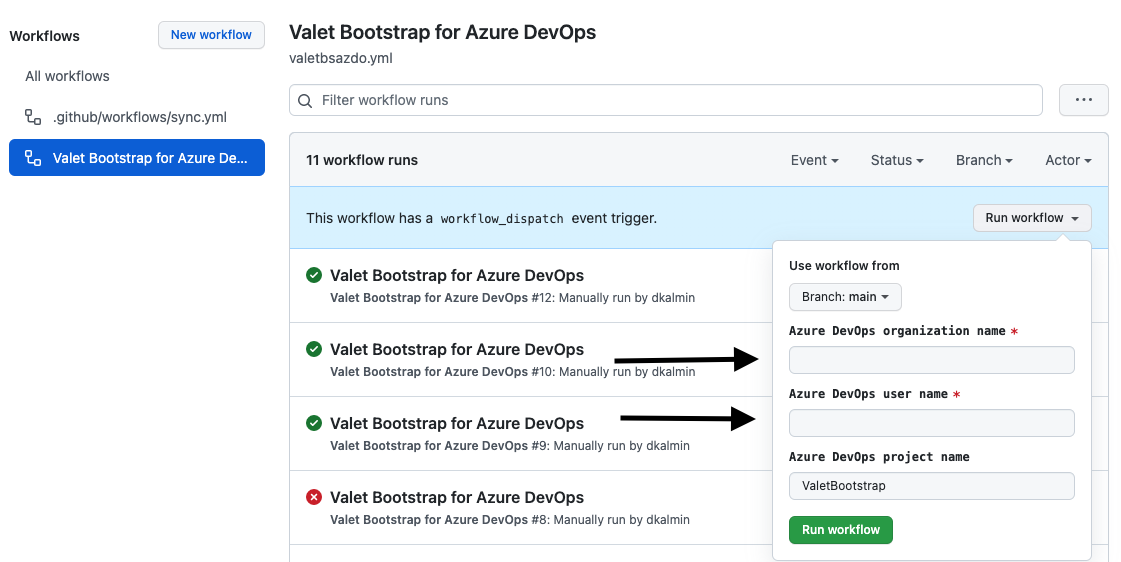
Run the Actions workflow:
|
|
- CLick the `Actions` tab
|
|
- Select the `Valet Bootstrap for Azure DevOps` action
|
|
- Click `Run Workflow`
|
|
- Input the Azure DevOps Organization name identified above
|
|
- Input the Azure DevOps user name of the user that created the Azure DevOps PAT above. This will be an email address
|
|
- Accept the default Azure DevOps project name or change it to one of your preference
|
|
- NOTE: The default project name is `ValetBootstrap`. This must be unique in your Azure DevOps Organization. If not, please choose a unique name.
|
|
- Click `Run Workflow`
|
|
- Verify the workflow completed successfully. If the workflow did not run successfully you will see a detailed error message.
|
|
|
|
### Example ###
|
|
|
|
|
|
|
|
## Use Valet with a codespace
|
|
|
|
1. Start the codespace
|
|
- Click the `Code` button above repository
|
|
- Click the `Codespaces` tab
|
|
- Click `New Codespace`
|
|
- Wait a couple minutes, then verify that the codespace starts up. Once it is fully booted up, the termininal should be present.
|
|
2. Verify Valet CLI is installed and working. More information on the [GitHub Valet CLI extension](https://github.com/github/gh-valet)
|
|
- Verify Valet CLI is installed and working
|
|
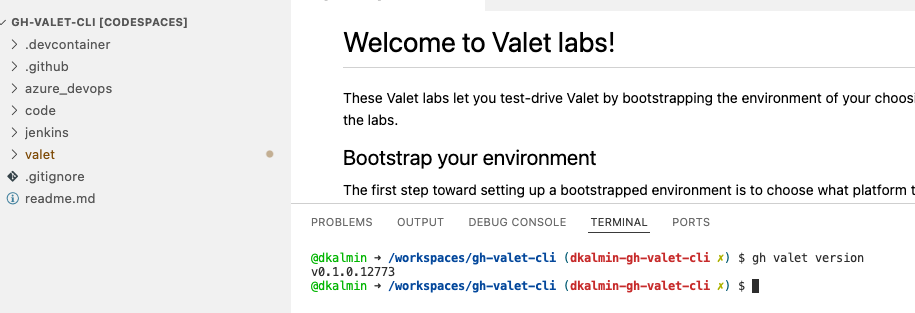
- Run `gh valet version` in the Visual Studio Code terminal and verify the output looks like the below image.
|
|
- If `gh valet version` did not produce a similar image please follow these instructions [Troubleshoot GH Valet extension](#troubleshoot-gh-valet-extension)
|
|
- Start using Valet by following along with the [Labs for Azure DevOps](#labs-for-azure-devops)
|
|
|
|
### Example ###
|
|
|
|
|
|
## Labs for Azure DevOps
|
|
Perform the following labs to test-drive Valet
|
|
- [Audit Azure DevOps pipelines using the Valet audit command](valet-audit-lab.md)
|
|
- [Dry run the migration of an Azure DevOps pipeline to GitHub Actions](valet-dry-run-lab.md)
|
|
- [Migrate an Azure DevOps pipeline to GitHub Actions](valet-migrate-lab.md)
|
|
- [Migrate an Azure DevOps pipeline to GitHub Actions with a custom transformer](valet-migrate-custom-lab.md)
|
|
- [Forecast: Valet forecast lab](valet-forecast-lab.md)
|
|
|
|
## Troubleshoot GH Valet extension
|
|
Manually Install the GitHub CLI Valet extension. More information on the [GitHub Valet CLI extension](https://github.com/github/gh-valet)
|
|
- Verify you are in the Visual Studio Code terminal
|
|
- Run this command to install the GitHub Valet extension
|
|
- `gh extension install github/gh-valet`
|
|
- Verify the result of the install is: `✓ Installed extension github/gh-valet`
|
|
- If you get a similiar error to the following, click the link to authorize the token
|
|

|
|
- Restart Codespace after clicking the link
|
|
- Verify Valet CLI is installed and working
|