 dkalminandGitHub
38b63d3af5
dkalminandGitHub
38b63d3af5
* Update readme.md

* Update readme.md

* Update readme.md

* Update devcontainer.json

* Update setupcodespace.sh

* Update valet-audit-lab.md

* Update valet-dry-run-lab.md

* Update valet-migrate-lab.md

* Update valet-migrate-custom-lab.md

* Update valet-audit-lab.md

* Update valet-audit-lab.md

* Update valet-dry-run-lab.md

* Update valet-migrate-lab.md

* Update valet-migrate-custom-lab.md

* Update valet-dry-run-lab.md

* Update valet-migrate-custom-lab.md
53 lines
2.4 KiB
Markdown
53 lines
2.4 KiB
Markdown
# Audit Azure DevOps pipelines using the Valet audit command
|
|
In this lab, you will use Valet to `audit` an Azure DevOps organization. The `audit` command can be used to scan a CI server and output a summary of the current pipelines. This summary can then be used to plan the timeline and effort required to migrate to GitHub Actions.
|
|
|
|
- [Prerequisites](#prerequisites)
|
|
- [Perform an audit](#perform-an-audit)
|
|
- [View audit output](#view-audit-output)
|
|
- [Review the pipelines](#review-the-pipelines)
|
|
- [Next Lab](#next-lab)
|
|
|
|
## Prerequisites
|
|
|
|
1. Follow all steps [here](../azure_devops#readme) to set up your environment
|
|
2. Create or start a codespace in this repository (if not started)
|
|
|
|
## Perform an audit
|
|
You will use the codespace preconfigured in this repository to perform the audit.
|
|
|
|
1. Navigate to the codespace Visual Studio Code terminal
|
|
2. Verify you are in the `valet` directory
|
|
3. Now, from the `valet` folder in your repository, run Valet to verify your Azure DevOps configuration:
|
|
|
|
```
|
|
gh valet audit azure-devops --output-dir audit
|
|
```
|
|
### Example
|
|

|
|
|
|
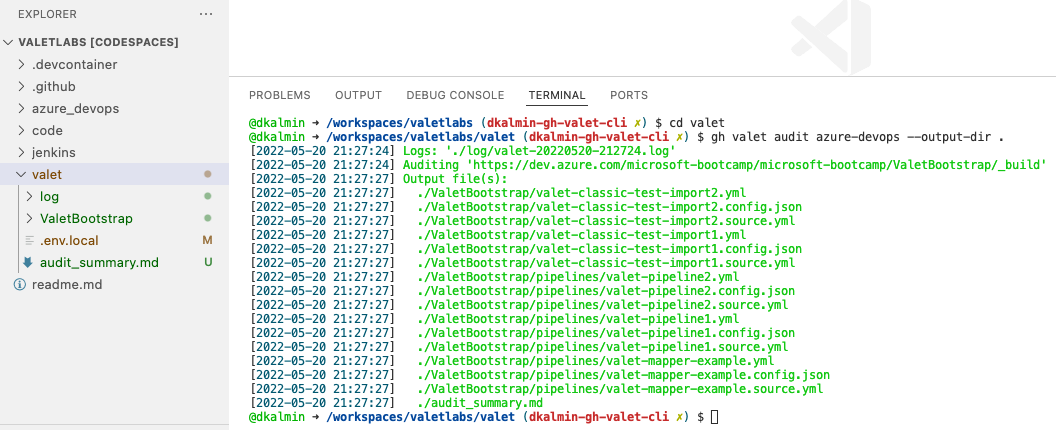
4. Valet displays green log files to indicate a successful audit
|
|
|
|
### Example
|
|
|
|
|
|
## View audit output
|
|
The audit summary, logs, Azure DevOps yml, and GitHub yml should all be located in the `valet` folder.
|
|
|
|
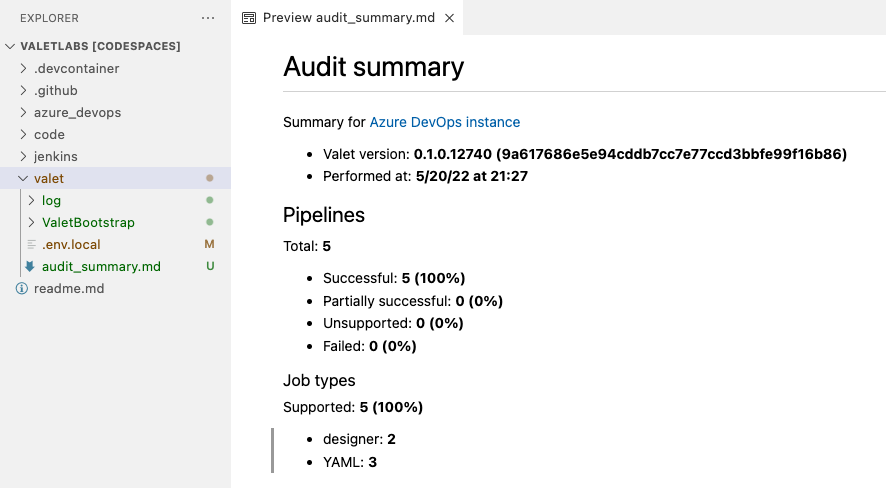
1. Under the `valet` folder find the `audit_summary.md`
|
|
2. Right-click the `audit_summary.md` file and select `Open Preview`
|
|
3. The file contains details about your current pipelines and what can be migrated 100% automatically vs. what will need some manual intervention or aren't supported by GitHub Actions.
|
|
4. Review the file.
|
|
|
|
### Example
|
|
|
|
|
|
## Review the pipelines
|
|
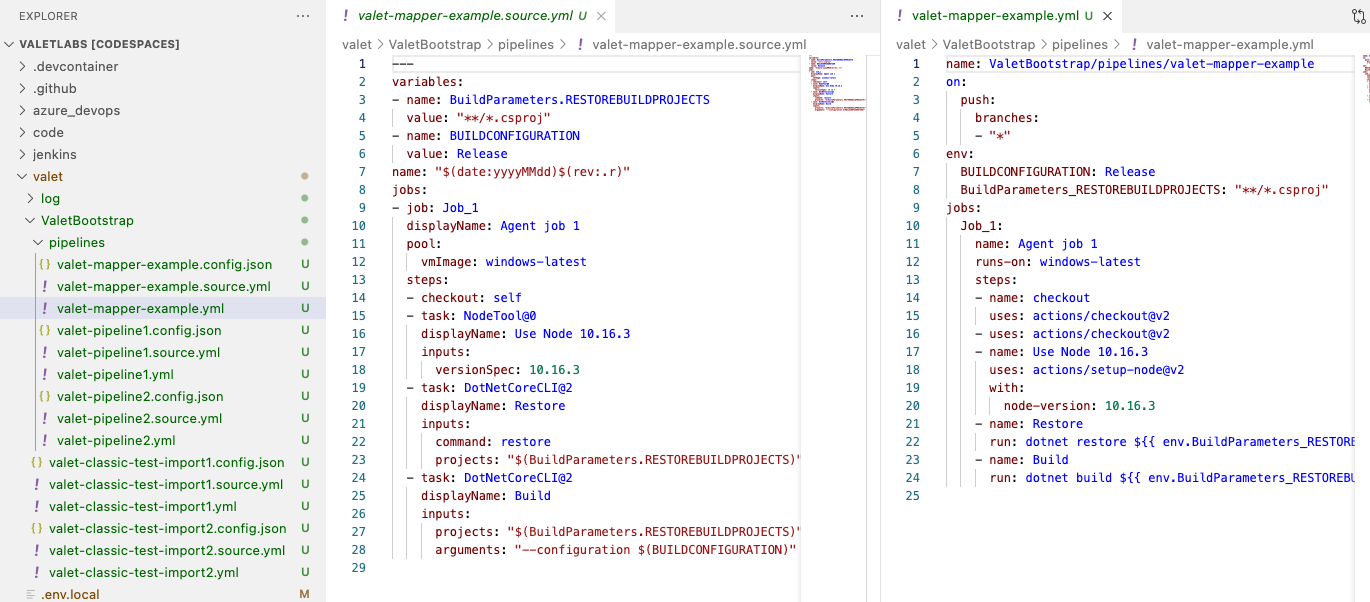
The `audit` command grabs the yml, classic, and release pipelines from Azure DevOps and converts them to GitHub Actions.
|
|
|
|
### Example
|
|
View the source yml and the proposed GitHub yml
|
|
|
|
|
|
### Next Lab
|
|
[Dry run the migration of an Azure DevOps pipeline to GitHub Actions](valet-dry-run-lab.md)
|